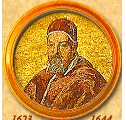

Born
April 1568
Birthplace
Florence, Italy
Pope from
6 August 1623
Pope until
29 July 1644
Died
29 July 1644
Who he was
A Florentine nobleman's son, raised in Rome by his uncle and educated by the Jesuits, he became a doctor of laws, nuncio in Paris, Bishop of Spoleto and a cardinal. He was also a poet, and wrote several of the hymns in the Breviary.
What he is remembered for
He set the rules that reserve beatification to the Holy See and forbid honouring anyone as a saint before the Church does so, reformed the Breviary, and founded the Urban College to train missionaries. He condemned the slavery of the native peoples of Paraguay, Brazil and the West Indies in 1639. The trial of Galileo took place in his reign, and he is also remembered for the great wealth that came to his Barberini relatives.
Sources
All popes · Home · All saints