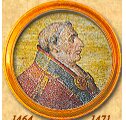

Who he was
Pietro Barbo was a Venetian and a nephew of Eugene IV; trained at first for a career in business, he entered the Church when his uncle became pope. He was Archdeacon of Bologna and Bishop of Cervia and of Vicenza, and became a cardinal in 1440, known as the Cardinal of Venice for his generosity and stately presence. He was elected in August 1464 and set aside the pledge the cardinals had made in conclave, holding it contrary to the constitution of the Church. He died in Rome in July 1471.
What he is remembered for
He built the Palazzo San Marco, now the Palazzo Venezia, enlivened the Roman carnival, organised relief for the poor, and gave all cardinals the right to wear the red biretta. He decreed that the Jubilee be held every twenty-five years, encouraged printing, and supported Hungary and Scanderbeg against the Turks. His suppression of the Roman Academy earned him a hostile biography from the humanist Platina.
Sources
All popes · Home · All saints